FIVE FISH
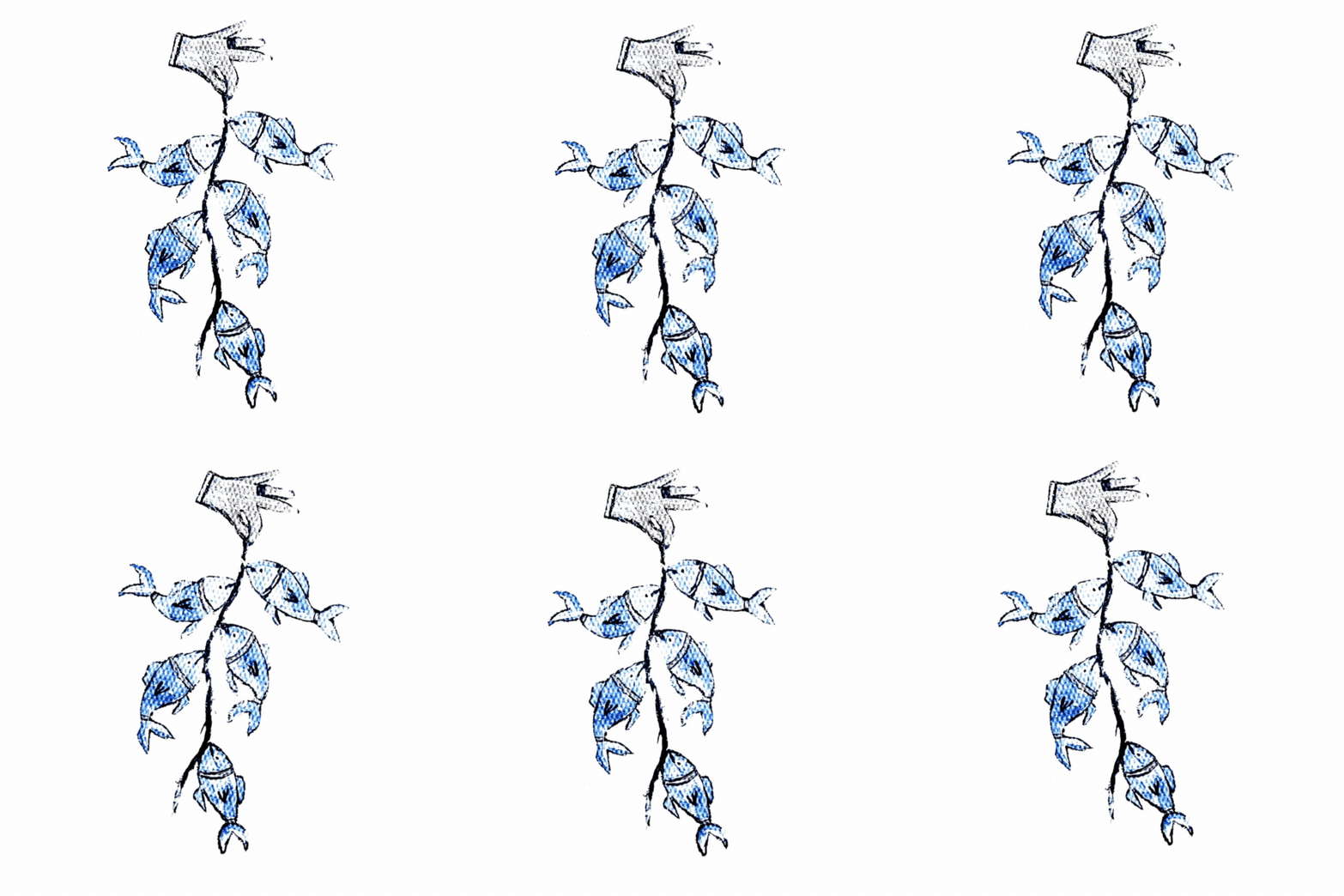
Five Fish publishes Mediterranean writing that has a relation to religious thinking, whether Christian, Islamic, Jewish, or from other faiths and the faithless. It publishes translations, fiction, memoir, essays, treatises, both supporting new writing and inviting readers to read old texts anew.The press is founded on the belief that the Mediterranean holds religious worlds that exceed the terrestrial and territorial. Whereas it is commonplace to talk about the Mediterranean as a cosmopolitan space of migration and encounter, the role of faith in these Mediterranean meetings, and the beliefs that have motivated Mediterranean journeys, is often overlooked.Five Fish records the voices of pilgrims and travellers, vagrants and mystics, merchants and passengers, martyrs and pagans. And listens to stories about the value of ritual, the intent of pilgrimage, prophetic futures, and the loss of faith.Printed and hand bound on the island of Djerba, Tunisia, each issue brings together five, individually published texts that share similar outlooks, even when coming from different shores.
What does it mean to feel protected? Some lock themselves in a fortress on a hill and from its walls throw things at their enemies below. Others build underground bunkers in the desert and fill them with canned vegetables and kerosene. Iron and stone serve the inhabitants of houses, but those who spend their lives traveling on the roads, relying on only skin and fabric to protect them from the world, traveling light and depending on kindness, and mild seasons and hearts, how do they protect themselves?To be constantly in motion, fresh as running water, to rub against the world and all that it contains, to let life pass through, emptying and refilling.Ownership attracts the wrath of God. Hoarding things, entrenching oneself in objects, believing that metal, clay and gold will protect and grant barakat. Baal, the ancient Canaanite god, his name means “ownership.” Adonai, the Hebrew god, derives from lordship. Who owns but God? God alone has ownership and lordship.Christians, Jews and Muslims, pagans and the irreligious, Canaanites and ancient Phoenicians, the passengers on the Mediterranean, belong to the sea more than the sea belongs to them. Passing along the roads, on land and water, they know the power of the evil eye. The eyes that rests for too long on you.Eye in Arabic and Hebrew is pronounced the same as the name of the letter Ayin: ע in Hebrew; ع in Arabic. Letter and word exist together. Unique to the Semitic languages and a rare sound, ayin holds a double meaning: both an eye and a source of natural spring water.
The earth is full of eyes. All of these little spots in shades of blue, growing into shapeless ponds smeared on a map. Moving upwards through the earth, natural springs are encircled by a wall and become a well, like thick, kohl eyelashes around a dark eye, satisfying those who come to the well with its tears. But the eye is not only generous and life giving, the eye also watches.The evil eye looks and wonders. “Why is this his? Why does she have this?” Marriage, birth, settling down—all forms of having can attract the narrow, aching eye that envies. It cries from the heart about the shameful nature of the world, where God distributes blessings with an inequality that outrages, arousing resentment and rage.
The divine bureaucracy is suddenly attentive; it awakens and examines the world of owners and the loot they have amassed. Do they really deserve these things? Babies, houses, income, loved ones, opportunities. With no evil intentions, by the power of a simple and ancient mechanism, the eye examines, judges, questions, evaluates.
All that is visible, all that is revealed, goes on trial.Having ownership urges protection from the eye. The kingdom of the ocean is the rare example of a place on earth where humans couldn’t’ rest their greedy eyes on, and grabbed it all. Greek bronzes discovered by chance by fishermen and sea sponge divers hold a different mystery to those dug up on land. The citizens of the ocean are glorified and envied. Unseen, hidden by the transparent water but not required to hide, protected but with no need for any concrete walls, the fish enjoys an ultimate effortless protection without paying with its freedom. But how is the safety of the fish brought ashore?Khamos is an ancient and common name among the Jews of Djerba. The community likes to name its sons and daughters after the sea: Hwita (small fish) and Bugid (red mullet) are also uniquely Jewish-Djerbian names. But Khamos has a special strangeness. Without any clear biblical root in Hebrew, the fish and Khamos reveal an ancient world of beliefs and symbols that protect Jewish island life. What is the connection between Khamos, and Hamis, the number five, and the Khamsa, the hand with five fingers?
It is mentioned once in the Torah: “Behold, he is Khamos by me, sealed in my treasures.”Khamos is a Semitic notion, appearing across different sister-cultures and languages, including Akkadian—the ancient original tongue of the Canaanites, the fathers of the Tyrians and the Phoenicians, the builders of Carthage, and the ancient occupiers of Tunisia, who came by sea from the Holy Land, descending from their mountain ports in Lebanon. In Akkadian, the word means hidden, guarded, protected from all eyes.The Khamsa, the protecting hand, draws its power from this ancient root and appears throughout North Africa. But the fish symbol remains unique to Tunisia. At Tunisian weddings as the celebrations come to an end the bride jumps over a fish seven times for luck.The early Christians associated Jesus with the fish. The underground catacombs of Rome and Naples, damp and dark like a sea cave, are filled with drawings of fish. Tertullian of Carthage described baptism like this: just as water sustains fish, “We, little fishes, after the image of our Ichthys, Jesus Christ, are born in the water.”In Arabic, the letter Nun (ن) translates to “fish” or “whale” and holds deep mystical significance; in his essay “The Mysteries of the Letter Nun,” The French-Egyptian esoteric and symbologist, René Guénon, notes the geometric form of the nun represents an “Ark floating on the waters.”The Qur'an itself refers to Jonah – Sayyidna Yunus – as Dhu-n-Nun—The Man of the Fish.
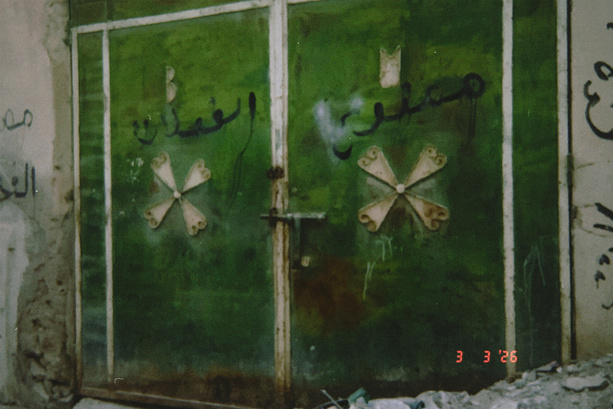
Jonah, in his desperate attempt to escape prophecy, boarded a ship to Tarshish. In his day, Tarshish represented the absolute edge of the earth, the furthest a person could travel by sea to get away. A Phoenician port, it remains a contested place. Some identify it with the south of Spain, others with Sardinia, but the early Jewish translation of the Torah into Greek in Alexandria (the Septuagint) and the early Christian Vulgate translation into Latin both translated Tarshish as “Carthage.”The eighth century Egyptian Sufi mystic Dhu’l-Nun al-Misri was, so the story goes, traveling by ship when he was accused of having stolen a merchant’s gold. As the accusations grew and the ship’s passengers turned on the mystic Dhu’l-Nun exclaimed, “Oh God, thou knowest!” and a vast shoal of fish emerged from the waters each with a pearl in its mouth. The people on the ship agreed the pearls were from God and “belonged to no one else” while Dhu’l-Nun announced, “The ship for you, God for me.”In Djerba, in the Jewish neighborhood of Hara Kabira, five fish are painted at the entrances to houses. The five fish are “khamsa and khmis”— the doubling of protection through the number five. It is painted on the wall to calm the heart before a wedding or a birth. The permanent and settled house of stone and concrete, the asset of all assets, takes on the grace of a fish—smooth, silver and elusive, transparent, moving, quiet and mysterious. It is now the traveller, the journeying fish, that gives protection to bricks and clay. The house itself will protect its inhabitants, while the fish will protect life, allowing it to flourish, to be pleasant, celebrated, and exalted.
GENERAL GUIDELINESWe accept electronic submissions sent to the email address at the bottom of this page. Please include the word ‘submission’ in the subject line.All submissions should include name(s), email address and a short biography.Texts should be submitted as an attached Microsoft Word file. We invite authors to also include relevant images along with their text. Please include these as separate image files.Please do not use AI to write your pitch, essay, story or in any communication with us.NONFICTIONWe are looking for essays, memoirs, oral histories, and anything that shines a light on the world of Mediterranean beliefs.We also accept pitches for pieces. Please include a working title and two paragraphs describing the piece, why it would be well suited for Five Fish and its estimated length. Nonfiction can be between 1,500 and 5,000 words, but we are willing to consider longer pieces that retain a narrative throughline.TRANSLATIONWe embrace the strangeness of translation and the slippages in crossing languages.Translations should be submitted with short context-setting essay that introduces the reader to the writer, the significance of the text, and any required context-setting information.FICTIONWe accept prose work between 2,000 and 10,000 words.
[email protected]
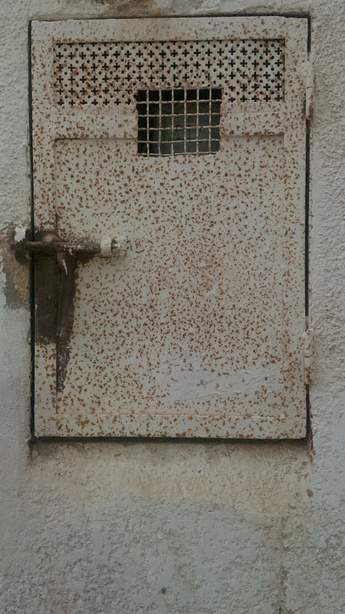
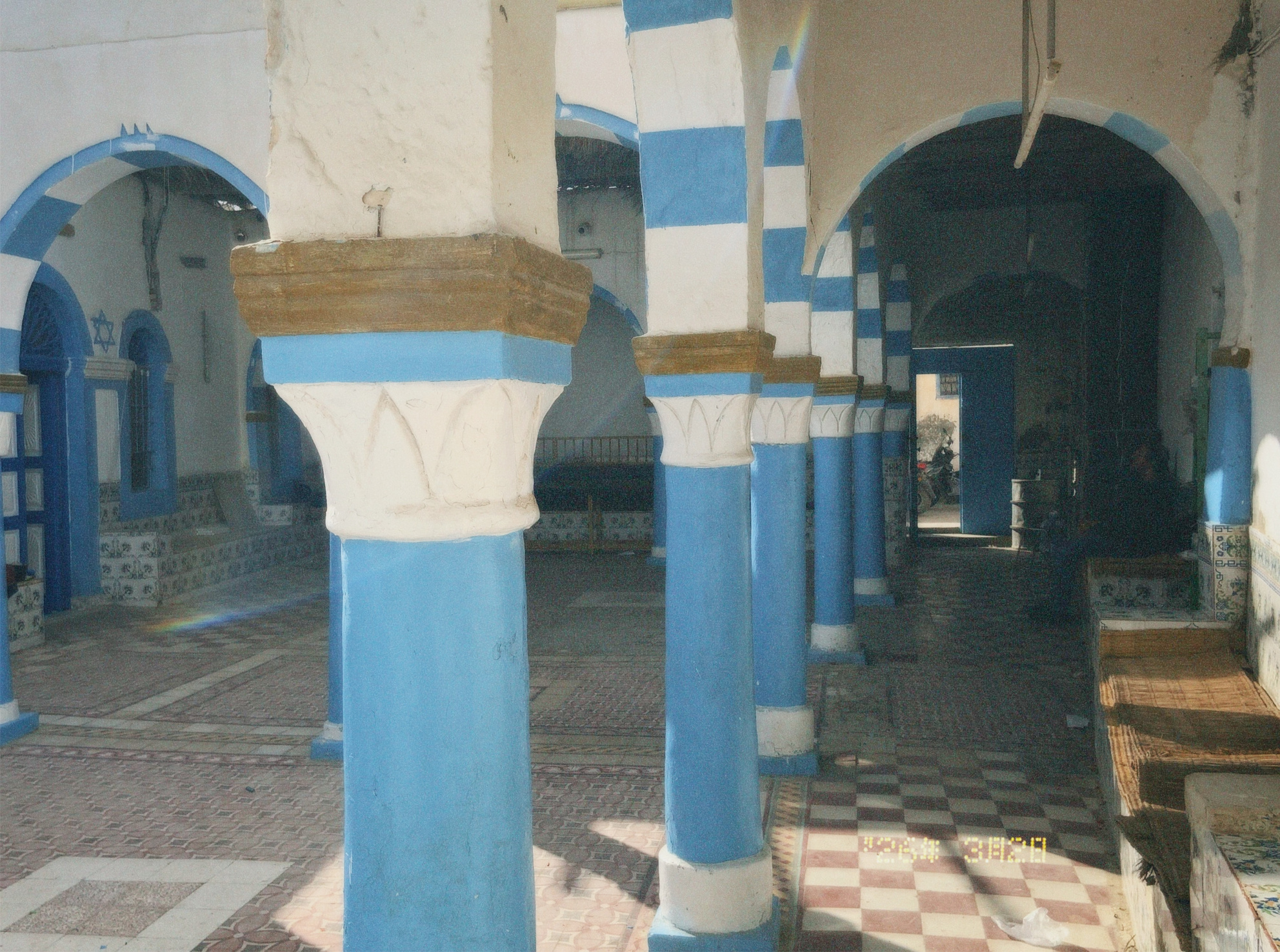
Five Fish accepts requests for up to three-week residency stays from writers, researchers, and visual artists with a personal or professional link to the Mediterranean, Tunisia, North Africa, or Djerba, on an ongoing basis. The residency allows a stay in a private room in a traditional house in Hara Zghira, for a symbolic payment of 24 USD per day. For requests, please send a short, personal letter and examples of recent work, at least two weeks before the desired stay.(Include title 'Residency')
[email protected]
We are in a process of editing our first edition, so we are no longer receiving submissions.
***We’re looking for an intern to help us plan and apply for grants for our annual retreat in Tunisia, for our board, artists, and writers. Interested?
Read more and apply here
Deadline for applications is October 30th 2026